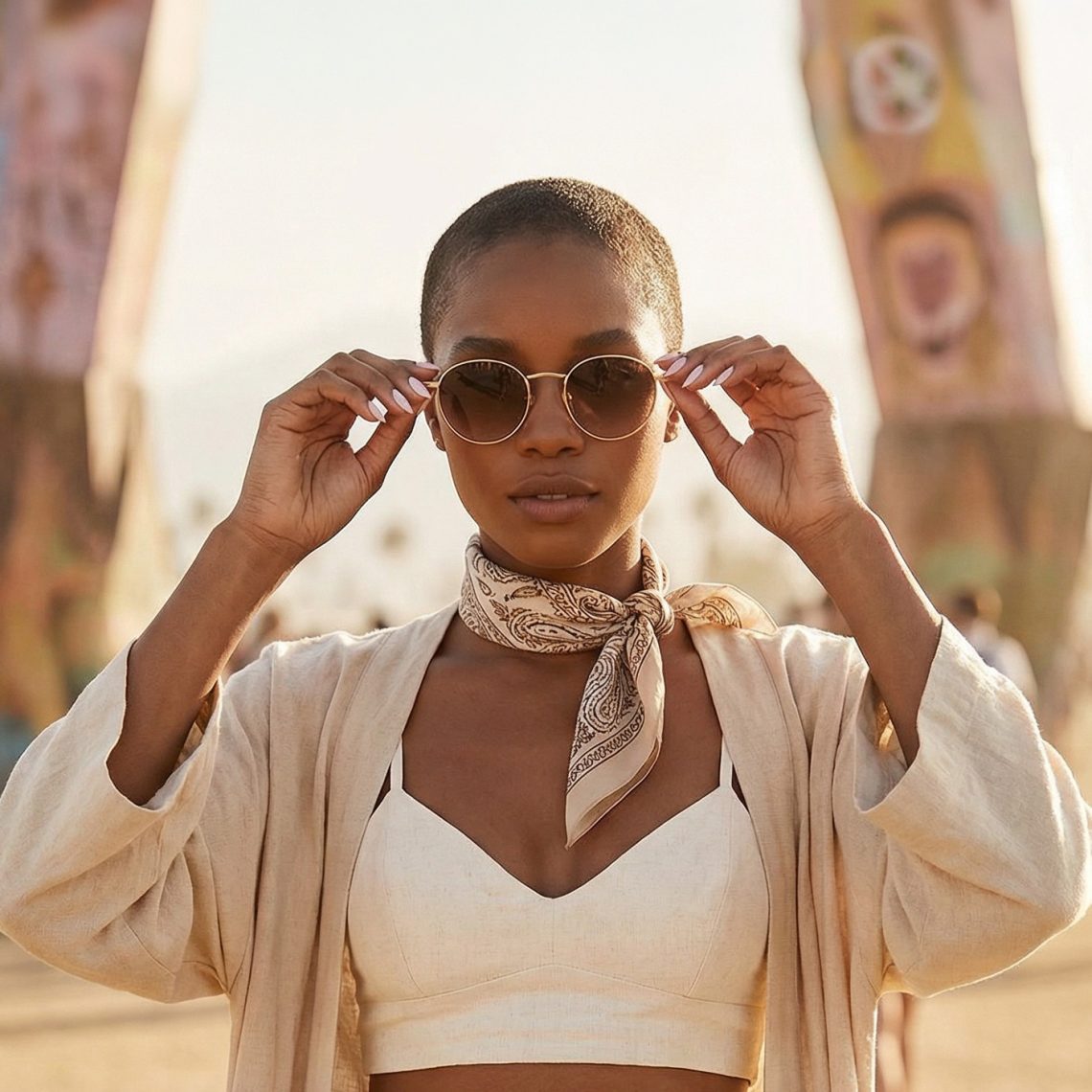
It is sunglasses season, and we are not just going with cute over here. Products that look good + protect our eyes are such a win, and choosing the right sunglasses is not just about the shape or the vibe, the lens technology matters just as much as the silhouette. Two terms you’ll see everywhere are UV protection and polarized lenses, and while they’re often mentioned together, they serve very different purposes.
Let’s dig into what each feature does, when you need it, and how to choose the right pair for your lifestyle and aesthetic. We checked in with the team at Velvet Eyewear, the chic, accessible eyewear line, founded by former optician and designer Cindy Hussey, for the scoop.

UV Protection: The Essential Foundation
UV protection is non‑negotiable. Think of it as SPF for your eyes — shielding them from ultraviolet rays that can contribute to cataracts, macular degeneration, and photokeratitis (yes, your eyes can get sunburned).
What to look for:
- Sunglasses labeled 100% UV protection or UV400
- Wear them outdoors every day — sunny, cloudy, driving, traveling, running errands
UV protection is about eye health, not aesthetics. Every pair you own should have it.
Polarized Lenses: Comfort, Clarity & Glare Control
Polarized lenses are all about reducing glare — the harsh, reflective light that bounces off water, roads, car hoods, sand, snow, and glass. They make bright days feel softer, clearer, and more comfortable.
Benefits:
- Reduced glare
- Richer color
- Sharper contrast
- Less squinting
- More comfortable driving and outdoor visibility
Best for:
- Driving
- Boating
- Beach days
- Outdoor dining
- Travel
- Environments with reflective surfaces
Important: Polarization does not equal UV protection. They are separate features.

When is Polarization Not Ideal?
Polarized lenses aren’t perfect for every situation. Some wearers notice that polarization can make LCD screens, dashboards, GPS units, and smartphones appear darker or distorted from certain angles. Athletes like golfers may prefer non‑polarized lenses because polarization can affect how terrain looks.
If you rely heavily on digital screens or need precise terrain visibility, non‑polarized lenses will probably be the better option.
Fashion Meets Function
For years, polarized sunglasses leaned sporty — great for fishing or boating, not always ideal for everyday style. Velvet Eyewear notes that fashion‑forward polarized sunglasses were historically hard to find, especially for women who wanted chic silhouettes without sacrificing glare reduction . That gap is finally closing. Brands now offer polarized lenses in timeless, feminine shapes that pair beautifully with modern wardrobes — meaning you no longer have to choose between comfort and style.
How to Choose the Right Lens for Your Lifestyle?
Use this quick guide to find your perfect match:
Choose UV Protection if you want:
- Essential eye health
- Daily wear
- Protection in all lighting conditions
Choose Polarized Lenses if you want:
- Glare reduction
- Better comfort while driving
- Clearer visibility near water or reflective surfaces
Choose Both if you want:
- Maximum protection
- Maximum comfort
- A single pair that works for most outdoor activities
Many people own one pair of polarized sunglasses for driving and outdoor days, and one non‑polarized pair for everyday wear or screen‑heavy activities.
Style Tip:
The best sunglasses are the ones that:
- Protect your eyes
- Fit your face shape
- Complement your wardrobe
- Feel comfortable all day
- Make you feel confident the moment you put them on
Lens technology is just one part of the equation — but understanding it helps you choose sunglasses that are not only stylish, but smart.
Ready to choose your favorite from Velvet Eyewear? Visit them here.